
Active Warrants in Lehigh County
Warrants are issued by courts, not by a records website. In Lehigh County, a Magisterial District Court or the Court of Common Pleas signs most warrants. A judge can order a warrant when there is a criminal complaint, a missed hearing, or a failure to follow a court order. The Lehigh County Sheriff's Office, led by Sheriff Joseph Hanna, handles service, civil process, sheriff sales, and concealed carry permits. The office does not publish a public list of active criminal warrants.
There is no official Lehigh County public active-warrant search portal. That fact matters. It keeps you away from unofficial warrant sites that charge fees, post stale data, or scrape names from old records. Those sites are not the county, and the county does not stand behind them. Instead, warrant clues show up inside the court systems the county and state already run for free.
The clearest path is the docket. A new charge, a bail action, or a failure-to-appear event will often appear in a Pennsylvania UJS docket sheet. You can read those sheets through the Pennsylvania UJS Case Search at no cost. The docket will not say "warrant" in plain words every time, but a missed hearing or a bench-warrant entry is a strong sign. For current status, you still need to call the court that issued it.
The Sheriff's Office page lays out its real duties, and it helps explain what the office does and does not do with warrants. You can view those functions on the Lehigh County Sheriff's Office page.
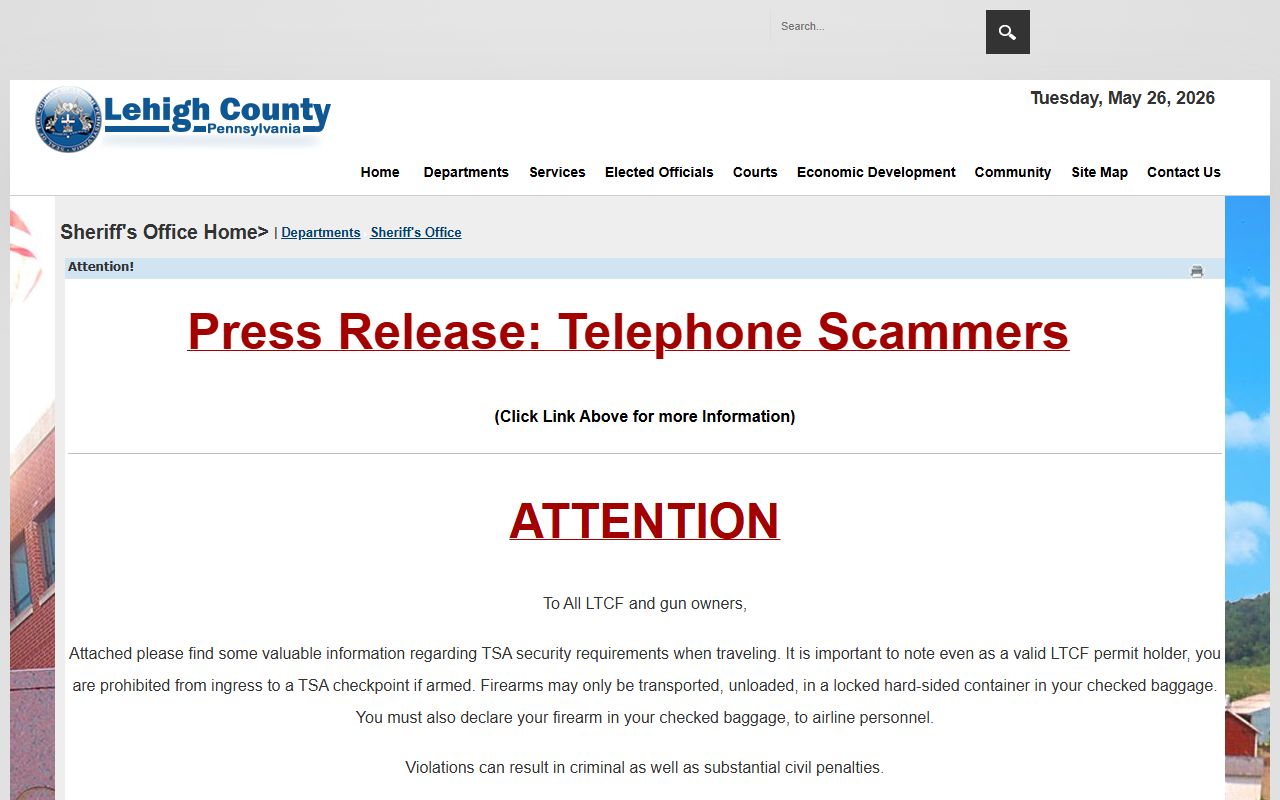
As that page shows, the Sheriff focuses on service of process, civil enforcement, and permits rather than a name-by-name warrant database. So a warrant question still routes back to the issuing court.
Types of Warrants in Lehigh County
Not every warrant is the same. The type tells you why it issued and which court to call. Some warrants follow a new charge. Others follow a court event you missed. A few are tied to another state or to a civil matter. Knowing the label saves time and keeps you from guessing.
- Arrest warrant - A court order that lets police arrest a person, based on a criminal complaint and probable cause.
- Bench warrant - Issued by a judge for a failure to appear, for contempt, or for a probation, parole, or court-order violation.
- Search warrant - Authorizes a search of a place, person, or property; these are often sealed before they are served and are not a public lookup item.
- Fugitive warrant or detainer - Based on charges or a warrant from another jurisdiction.
- Civil body attachment - A civil bench warrant that can arise in support or contempt matters; it is not the same as an ordinary criminal arrest warrant.
The table below compares these warrant types side by side. Use it to figure out which court or office fits your situation.
| Warrant Type | Why It Issues | Usual Source | Public Lookup |
|---|---|---|---|
| Arrest warrant | Criminal complaint and probable cause | MDJ or Common Pleas | Clues may appear on the criminal docket |
| Bench warrant | Missed hearing, contempt, or order violation | The court that set the event | FTA or bench-warrant entries may show on the docket |
| Search warrant | Authority to search a place or person | MDJ or Common Pleas | Often sealed; not a public lookup item |
| Fugitive warrant or detainer | Charges from another jurisdiction | Court or another state | May surface through custody or docket status |
| Civil body attachment | Support or civil contempt | Domestic Relations or Civil Division | Family or civil docket access can be limited |
How to Search Lehigh County Warrants
Because the county runs no public warrant portal, a warrant search in Lehigh County is really a docket search plus a phone call. Start with the free statewide system, find the case, and read the events. Then call the court that issued the order. The docket tells you where to look; the court tells you what is active right now.
The UJS Case Search is the best free starting point. It holds docket sheets for Common Pleas and the Magisterial District Courts. A missed hearing, a bail action, or a bench-warrant note is the kind of clue you want to spot. You can open the portal at Pennsylvania UJS Case Search.
- Open UJS Case Search by name and pick Lehigh as the county to find the docket and court.
- Read the docket to decide if it is a Magisterial District Court matter, a Common Pleas criminal case, a domestic relations case, or something else.
- Call the issuing court or clerk before you appear, if it is safe and appropriate to do so. Do not rely on unofficial warrant websites.
- Talk to counsel or the Public Defender if you qualify, before you surrender or file any motion.
- If bail is set, follow the court's instructions. The Lehigh County Criminal Division collects cash only for monetary bail.
- After the matter is resolved, confirm the warrant is cleared in the docket or court system, since online systems can lag.
For a criminal docket or a bail question, the Criminal Division can be reached at 610-782-3077. For underlying charges and case history, the Lehigh County arrest records page explains how criminal cases move from complaint to disposition.
Note: A docket can lag, and very new arrests or sealed matters may not show up right away, so a clean search does not always mean no warrant exists.
Where Lehigh County Warrant Clues Appear
There is no warrant search form to fill out in Lehigh County, so this is not a list of fields you type into a warrant database. Instead, it is a map of the official systems where a warrant clue can surface. Each one is a docket source or a direct contact, not a private aggregator. Match the situation to the right source and you will find the case faster.
| Source | What It Shows | Access | Notes |
|---|---|---|---|
| UJS Case Search | Docket sheets, case status, hearing events | Free, statewide | Select Lehigh County; documents are not downloadable here. |
| Magisterial District Court docket | Summary, traffic, and preliminary case status | Free through UJS | Failure-to-appear and bench-warrant events may appear. |
| Common Pleas criminal docket | Charges, bail action, proceedings | Free through UJS | Bail and FTA entries can signal a warrant. |
| Criminal Division | Bail records and criminal docket help | Phone 610-782-3077 | Cash only for monetary bail. |
| Issuing court or clerk | Current warrant status | Direct contact | Confirm before appearing; do not trust third-party sites. |
If your case began with a missed traffic court date, the path is a little different. Search UJS by citation or name to find the Magisterial District Court docket, then call the MDJ office listed on that docket right away. Ask about failure-to-appear status, payment or plea options, and whether a bench warrant or a PennDOT suspension certification has already issued.
What a Lehigh County Warrant Clue Shows
When a warrant clue does turn up, it shows up inside a docket sheet, not a stand-alone warrant page. The docket lays out the case and its events. A bench-warrant or failure-to-appear line is the part you watch for. The fields below are common docket items that point to warrant activity in a Lehigh County criminal case.
| Field | What It Shows |
|---|---|
| Docket Number | The case ID; Lehigh Common Pleas criminal dockets use the CP-39-CR format. |
| Court Name | Whether the case sits in a Magisterial District Court or the Court of Common Pleas. |
| Charges | Counts, statute sections, grades, and the offense description. |
| Proceedings | Hearings and events, where a failure-to-appear or bench-warrant entry can appear. |
| Bail Action | Bail amount, type, and posting status tied to the case. |
| Case Status | Whether the matter is open, closed, or awaiting an event. |
These fields are docket items, not a confirmed warrant record. A docket can hint at a warrant, but only the issuing court can tell you it is active. For a fuller breakdown of docket events, see the Lehigh County court dockets page.
What to Do If You Have an Outstanding Warrant
A warrant does not go away on its own. Ignoring it tends to make things worse, since a missed event can add a bench warrant on top of the first issue. The safer route is to find the issuing court, learn the warrant type, and get advice before you act. Move quickly, but move with a plan.
Start by finding the case through UJS Case Search and naming the court that signed the order. Decide whether it is a Magisterial District Court matter, a Common Pleas criminal case, a domestic relations issue, or something else. Then call that court or clerk before you appear, when it is safe to do so. If you qualify for a public defender, talk to that office first. The Office of the Public Defender sits in Room 615 at 455 Hamilton St. and can be reached at 610-782-3157 for eligible defendants.
If bail is involved, follow the court's directions. The Criminal Division at 610-782-3077 keeps bail records and takes cash only for monetary bail. After the matter clears, check the docket again to confirm the warrant is gone, because the online system can lag behind the courtroom.
Important: Talk to a lawyer or the Public Defender before you surrender or appear, and never assume you can safely ignore a warrant.
Federal Warrants and Eastern District Cases
County tools do not cover federal warrants. If a charge is federal, it does not run through the Lehigh County courts or the county Sheriff. Federal matters in this area are handled by the U.S. District Court for the Eastern District of Pennsylvania, with an Allentown federal courthouse on West Hamilton Street. Prosecutions are brought by the U.S. Attorney's Office for the Eastern District.
The U.S. Attorney's Office page explains the federal prosecutor's role and the district it covers. You can review it at the U.S. Attorney's Office, Eastern District of Pennsylvania.
As that page makes clear, federal cases follow their own track. Federal warrant or case questions go to the federal court and federal counsel, not to the county clerk or the Sheriff's Office. So a federal matter and a county matter are two separate searches.
Restricted Lehigh County Warrant Records
Some warrants are not public, and that is by design. Search warrants are often sealed before they are served, so they will not show up in any open docket search. Juvenile matters are restricted under Pennsylvania law. Sensitive family events, like certain protection-order and support filings, can also be limited or redacted. A blank result does not always mean nothing exists.
When a warrant or a case is finished, the record story can change again. After a matter is resolved, some Pennsylvania records may later qualify for expungement, which removes qualifying records from criminal history access except for law enforcement and court officials. The rules sit in the state expungement statute, 18 Pa.C.S. § 9122. You can read it at the Pennsylvania expungement statute, 18 Pa.C.S. § 9122.
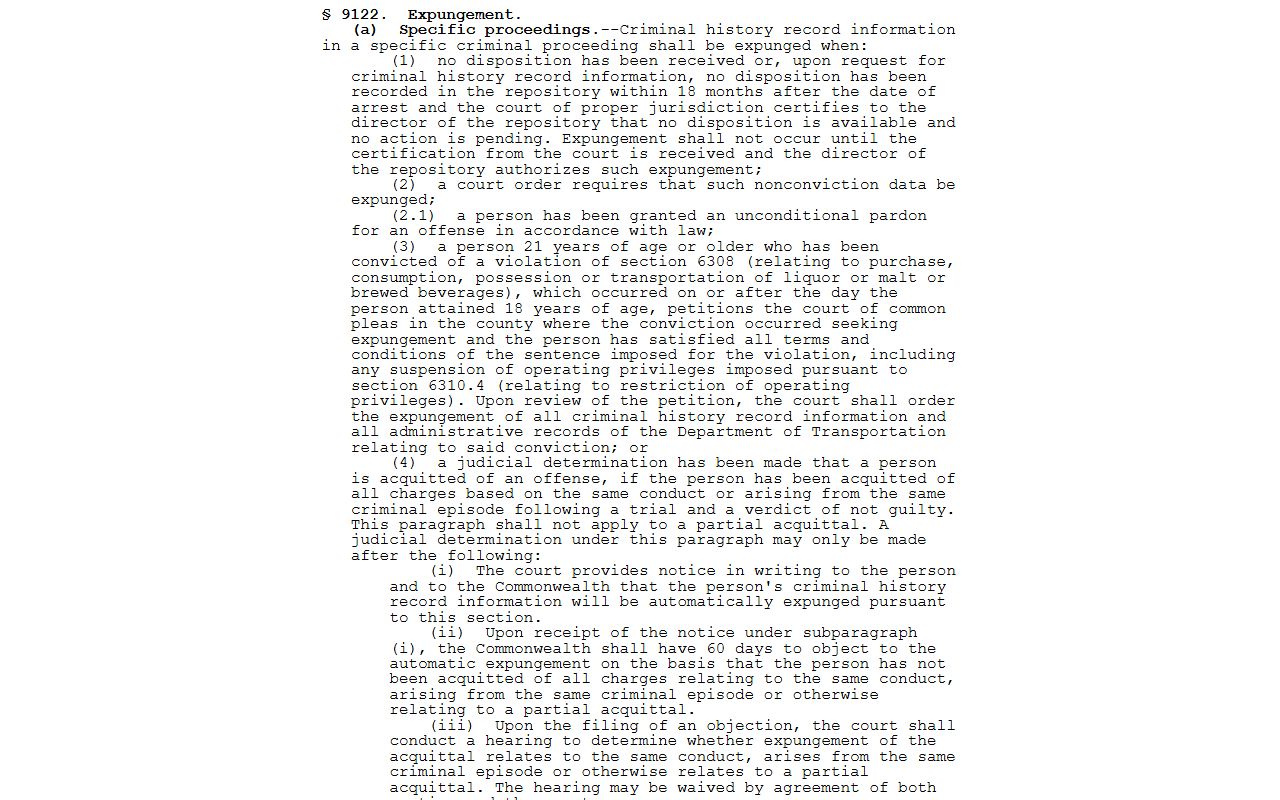
As the statute shows, expungement applies to Pennsylvania arrests and convictions, not to out-of-state or federal records. Eligibility turns on the offense, the final disposition, any waiting period, and your later criminal history. It is not automatic, and it is separate from the warrant itself.
Lehigh County Warrant Contacts
One clear contact often beats an hour of online guessing. For criminal docket and bail questions tied to a possible warrant, the Criminal Division is the right office. For the warrant type and the issuing court, use UJS first, then call. The card below lists the main criminal-records contact for the courthouse in Allentown.
Lehigh County Criminal Division
Clerk of Judicial Records
455 West Hamilton Street, Room 122
Allentown, PA 18101-1614
610-782-3077
Cash only for monetary bail
If a person has already been arrested on a warrant, check custody status through the Lehigh County inmate records page rather than the docket alone. For the broader case file, certified copies, and court contacts, the Lehigh County court records page and the Court of Common Pleas page lay out the divisions and how to reach them.